Bass Ophicleide
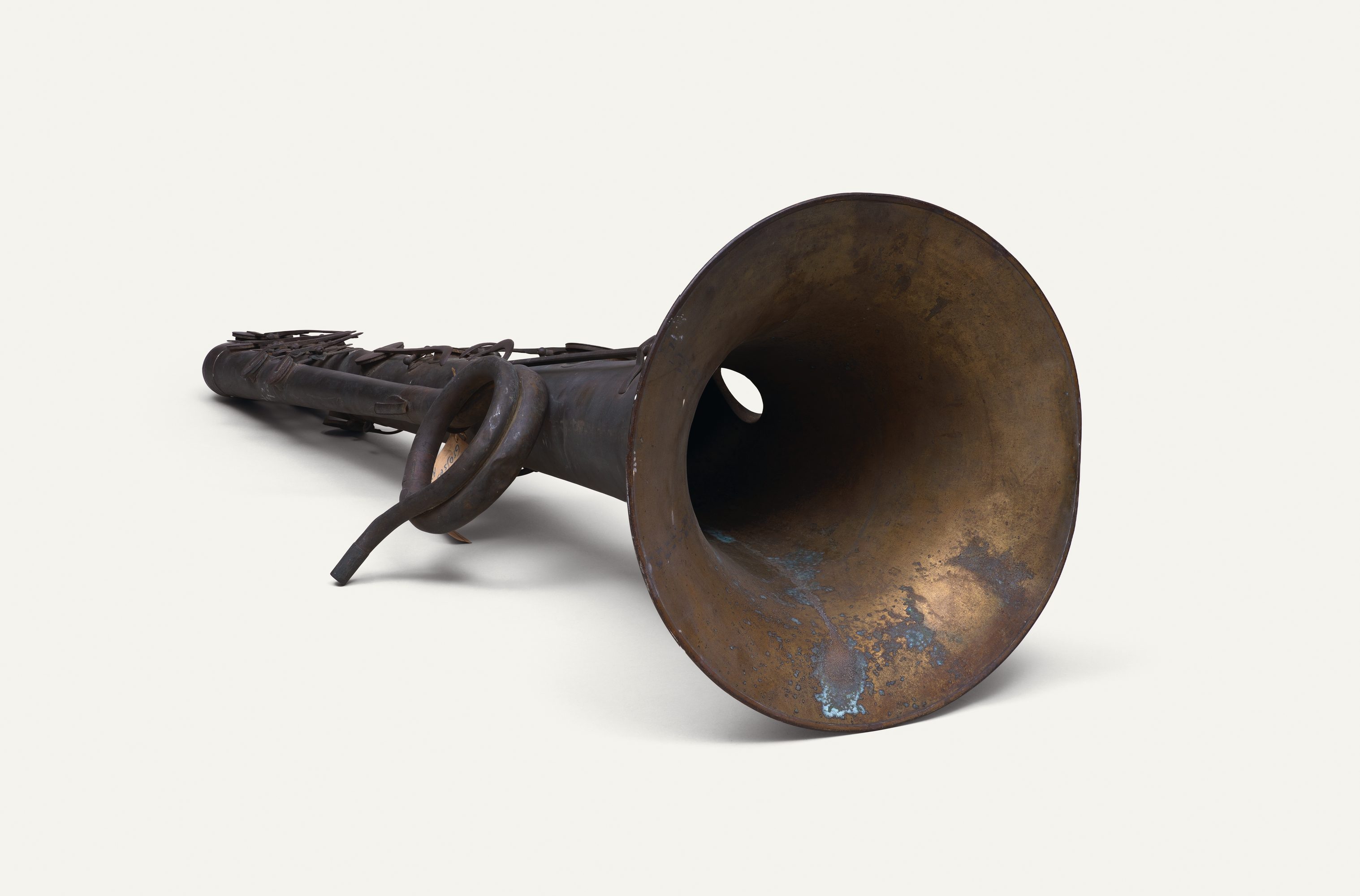
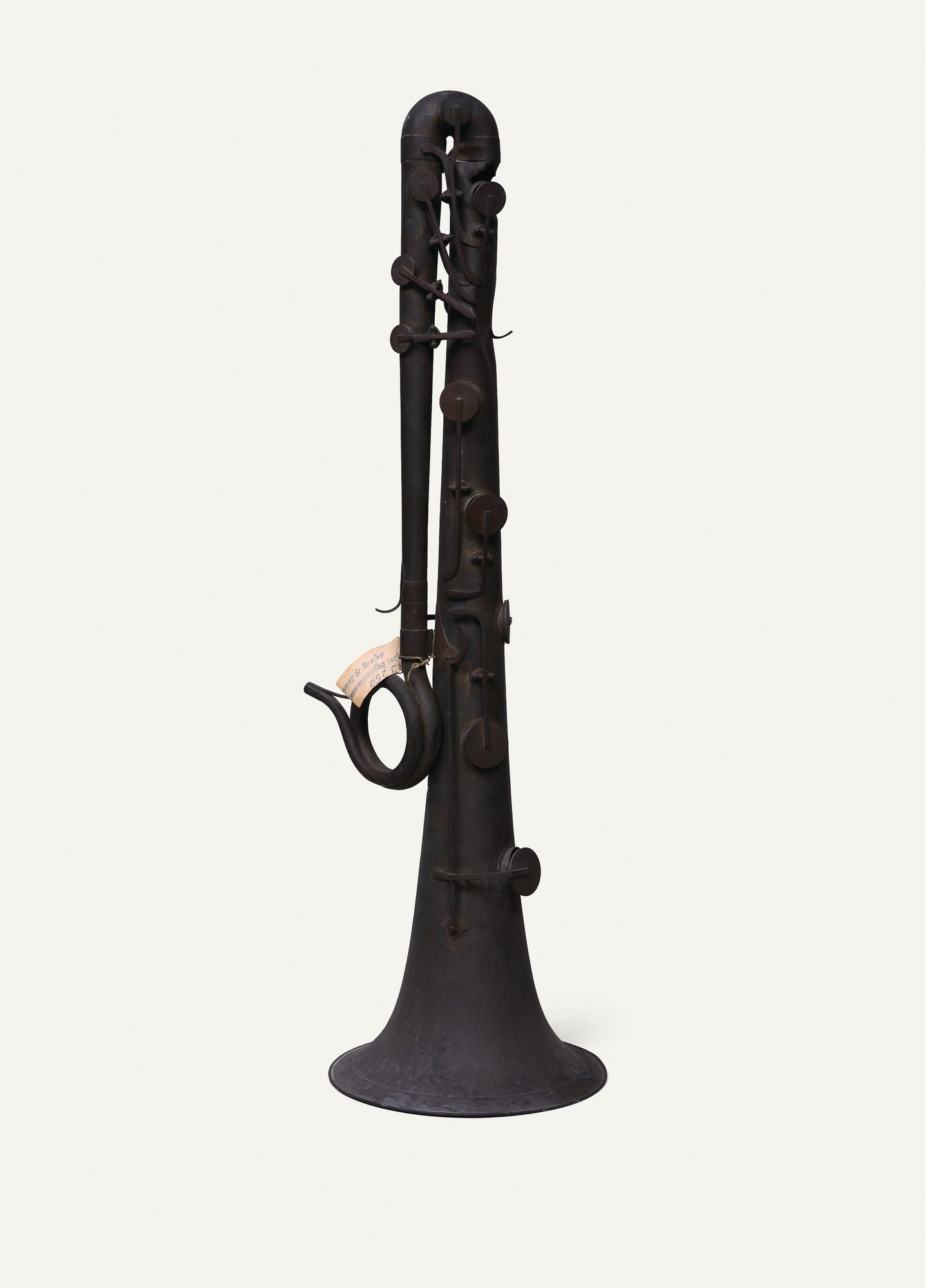
The ophicleide is a brass instrument that extends the bugle’s range into alto, bass, and contrabass registers, and proved popular in military bands and orchestras across the nineteenth century. Its name comes from the Greek ophis and kleis, literally a “keyed serpent,” for its design updated a snaking, low-pitched Renaissance instrument known as “the serpent,” which used tone holes instead of keys. This particular ophicleide was made by Andreas Barth in Munich, Germany, circa 1850. Barth had previously obtained a patent to manufacture an improved design on the trumpet in 1832, and was formally licensed to make brass instruments in 1835. After Barth’s death in 1868, his widow, Margarethe,continued the business, followed by her son, Johann, in 1872. Johann eventually shuttered the workshop, moving to Regensburg to sell flour in 1877. This bass ophicleide in the collection of the Germanisches Nationalmuseum is punctured near the bottom bow. The instrument is thought to have been damaged when the collection was being transported to safety on account of bombing raids during World War II.
Bass ophicleide, Andreas Barth, München, Germany, ca. 1850. Inventory number: MI250. Collection: Germanisches Nationalmuseum, Nürnberg.