The Balaclava Bugle
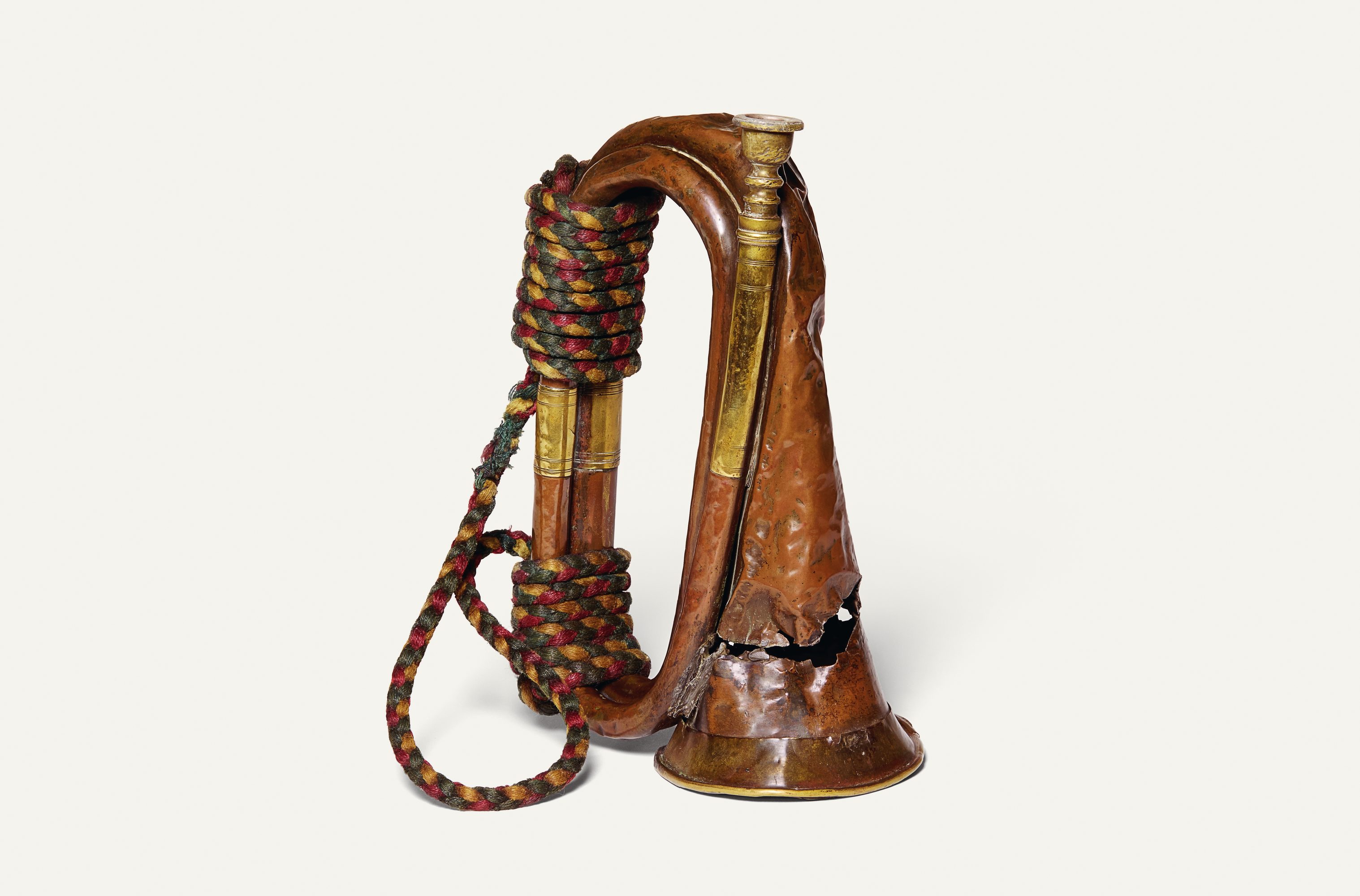
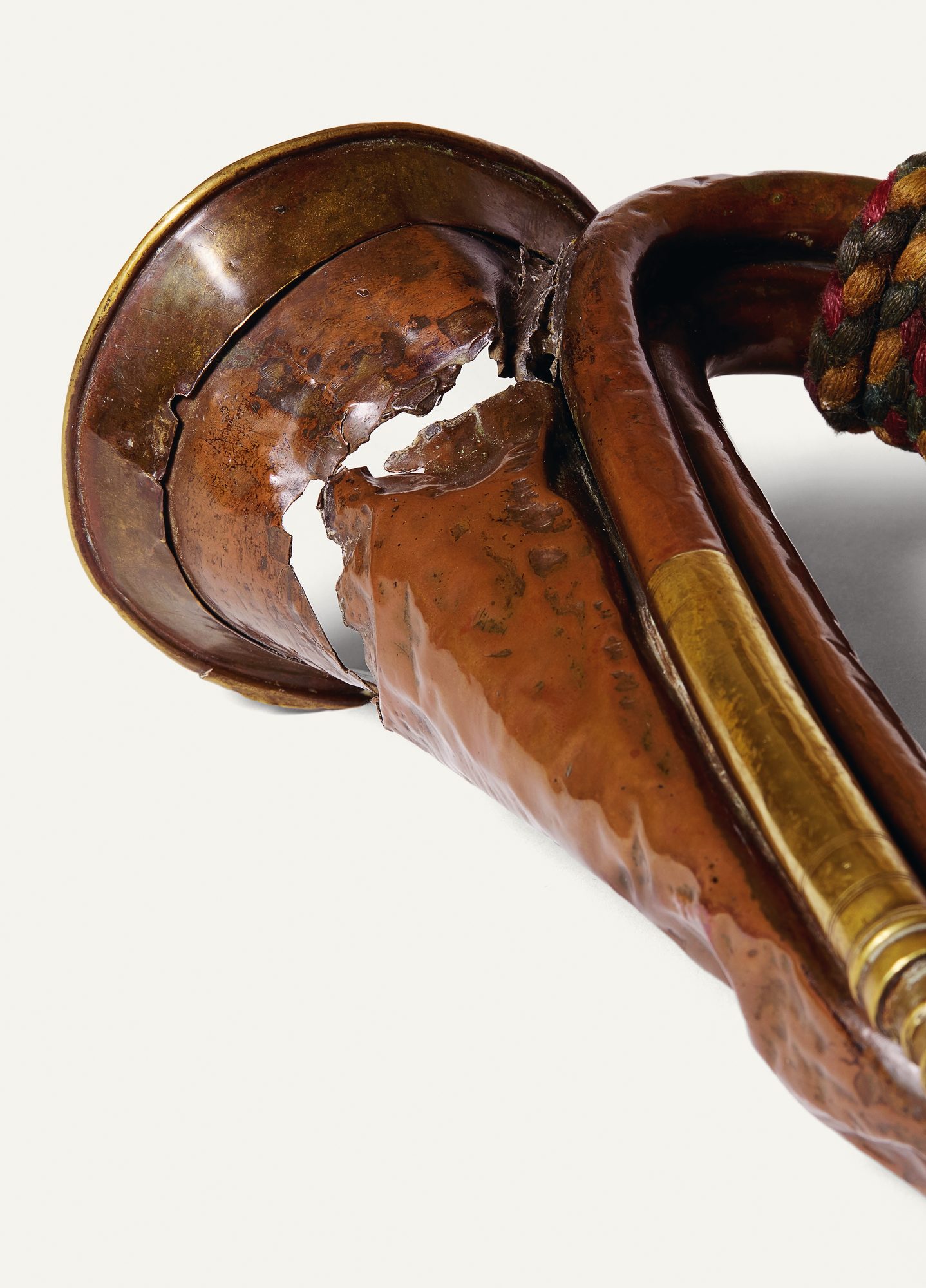
The Balaclava Bugle was used to sound the Charge of the Light Brigade on 25 October 1854, during the Crimean War. It was carried by Trumpeter William Brittain, 17th Lancers, the Orderly Trumpeter to Lord Cardigan. When Lord Cardigan ordered the Light Brigade to advance, it was Brittain who sounded the first calls, including the charge, which were repeated through the ranks. The charge itself was the result of a misunderstood order from the commander-in-chief, Lord Raglan, who had intended the Light Brigade to attack a different objective for which light cavalry was better suited. The bugle has come to serve as a symbol of patriotism, an instrument “whose mythologized notes,” writes Lara Kriegel, “condensed in their sound the virtue of soldierly duty and glory of British loyalty,” even when facing certain, avoidable death. Brittain was badly wounded in the last salvo fired by the Don Cossack Battery. It was reported that while he lay injured on the battlefield, a Cossack approached and tried to pick up the bugle with his sword, hoping to capture a trophy. But as the cord was still tied to Brittain’s wrist, the Cossack only managed to pierce the bell of the bugle, accounting for the damage we see today. After the battle, his comrades brought Brittain, still clutching his bugle, back to the British lines. He was then taken to Scutari where he was nursed by Florence Nightingale. William Brittain died of his wounds on 14 February 1855; the bugle was passed to his father in Dublin, who had also served in the 17th Lancers.
The Balaclava Bugle, Potters of London. Mid-19th century. Collection: The Queen’s Royal Lancers & Nottinghamshire Yeomanry Museum in Nottinghamshire.