Military Bugle
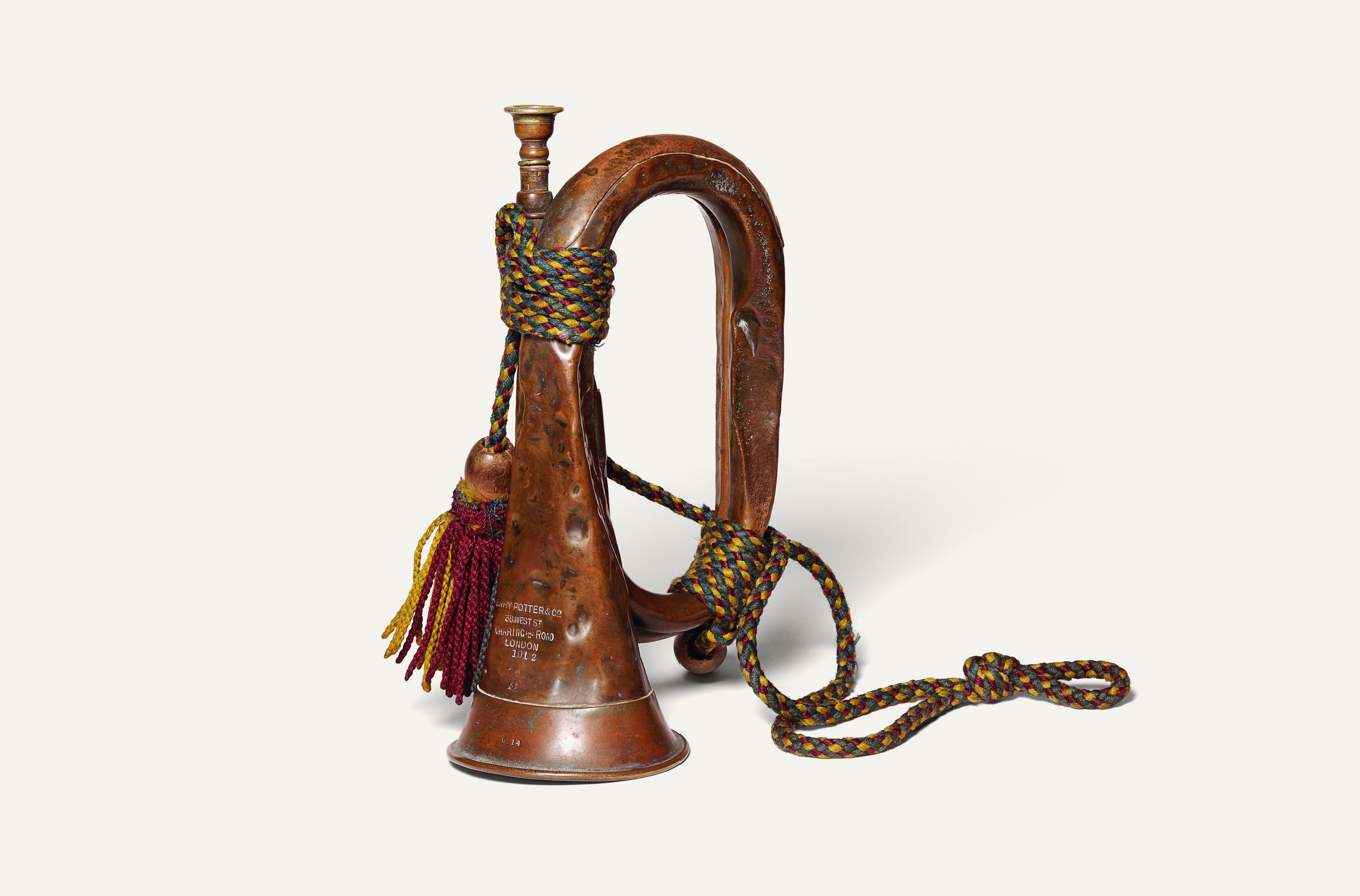
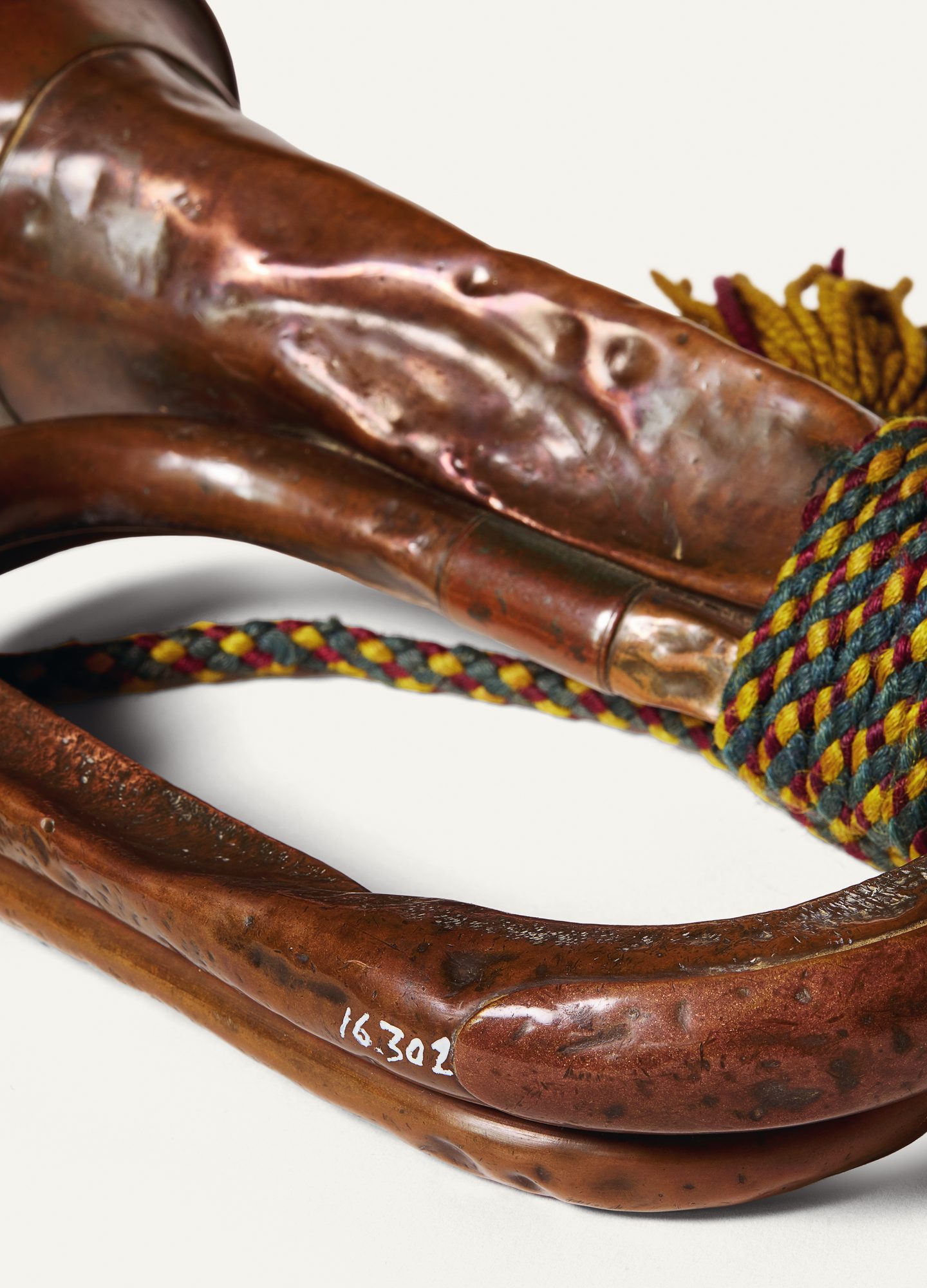
We do not know much about this military bugle, which was badly dented during World War I. It is stamped “Henry Potter & Co. 36 West Street, Charing Cross Road, London” and dated 1912. It probably played a similar role to other bugles that were used both for military signaling and sabotage throughout the conflict. During the Battle of Le Cateau on 26 August 1914, for example, German buglers sounded the British call for “ceasefire” in an attempt to confuse enemy troops into surrendering. Bugle sounds also framed the war. The taratantara of Drummer Jack Downs’s bugle led the 36th (Ulster) Division into the Battle of Somme; in the Forest of Compiègne, Hartley “Hot Lips” Edwards played “Taps” on his bugle on the eleventh hour of the eleventh day of the eleventh month of 1918—a call that would come to signify the end of World War I. Some bugles even saved lives: William Starn of the 1st Battalion Dorset Regiment was hit with a bullet on the Western Front in 1916. Looking down, he realized that he would emerge bruised but relatively unharmed: the projectile had hit his bugle, destroying part of its coil, which stopped the bullet in its tracks.
Military Bugle, Henry Potter of Charing Cross Road, London. World War I. Collection: The Queen’s Royal Lancers; Nottinghamshire Yeomanry Museum in Nottinghamshire.